
Why the First Two Weeks After a Crash Matter So Much
Key Takeaways: The Florida 14-day rule says you generally must get initial medical care from a qualifying provider within 14 days of a car accident to qualify for Personal Injury Protection (PIP) medical benefits under Fla. Stat. § 627.736(1)(a). Qualifying providers include medical doctors, osteopathic physicians, dentists, chiropractors, advanced practice registered nurses, hospitals, and EMS. A first visit to someone like a massage therapist does not count, and PIP does not pay for massage at all. PIP generally pays 80 percent of reasonable medical expenses up to $10,000. To get the full $10,000, a qualifying provider must find that you had an emergency medical condition. Otherwise, medical benefits are generally capped at $2,500. Your deductible and whether your policy excludes lost wages can also change how much PIP pays. Getting care early and keeping a consistent treatment record can also help if you later bring a pain-and-suffering claim against the at-fault driver.
The Florida 14 day rule for car accidents is a Personal Injury Protection (PIP) requirement. Under Fla. Stat. § 627.736(1)(a), PIP generally pays 80 percent of reasonable expenses for medically necessary care, but only if you receive initial services and care within 14 days after the accident. If you miss that window, you will generally lose access to PIP medical benefits. After a Miami car accident, the days following the crash can feel chaotic, but knowing this deadline can help protect your health and your claim.
If you were hurt in a crash and have questions about your PIP benefits or what to do next, Furmanski Law Group is here to help. Call 305-900-6657 or contact us now to talk with attorney Daniel Furmanski directly about your situation.
How Florida’s No-Fault System Sets the Stage
Florida is a no-fault state, so after most crashes your own PIP coverage is generally the first place you turn for medical bills. Under Fla. Stat. § 627.736(1), PIP generally provides up to $10,000 in combined medical and disability benefits, plus a separate $5,000 death benefit. The 14-day rule and the $2,500 limit discussed below apply to the medical part of that benefit. You can read the full text in Florida’s motor vehicle insurance statutes.
Who PIP Usually Covers
PIP coverage reaches more people than many first-time claimants expect. In general, Fla. Stat. § 627.736(1) covers:
- The named insured on the policy
- Relatives living in the same household, unless excluded
- People driving the insured vehicle
- Passengers in the insured vehicle
- Pedestrians struck by the insured vehicle
There are limits. Under Fla. Stat. § 627.736(4)(e), drivers and passengers who are not the named insured or a household relative are generally covered by the vehicle owner’s PIP while occupying the insured vehicle, provided they do not own a separate vehicle required to carry its own PIP and are not already entitled to PIP benefits from another insurer; Florida residency is not required for these occupants. Pedestrians struck by the insured vehicle, on the other hand, must be Florida residents, in addition to not owning a vehicle requiring its own PIP, to qualify for coverage. If you are unsure whose PIP applies to you, have someone review the policy with you.
Understanding the Florida 14 Day Rule Car Accident Requirement
The core of the rule is simple: get seen by a qualifying provider within 14 days. Fla. Stat. § 627.736(1)(a) ties PIP medical benefits to receiving "initial services and care" within 14 days after the accident. Many people wait because they feel "okay" or need to get back to work. That is understandable, but some injuries, like soft tissue damage or concussions, may not show symptoms right away.
Which Providers Count for the Initial Medical Care Deadline
Not every provider satisfies the initial medical care deadline. Under Fla. Stat. § 627.736(1)(a)1, initial care must generally be provided, supervised, ordered, or prescribed by one of the following:
| Qualifying Provider or Setting | Statutory Reference |
|---|---|
| Medical doctor or osteopathic physician | Ch. 458 or 459, Fla. Stat. |
| Dentist | Ch. 466, Fla. Stat. |
| Chiropractic physician | Ch. 460, Fla. Stat. |
| Advanced practice registered nurse | § 464.0123, Fla. Stat. |
| Hospital or hospital-owned facility | § 627.736(1)(a)1, Fla. Stat. |
| Licensed emergency transport and treatment (EMS/ambulance) | Part III, Ch. 401, Fla. Stat. |
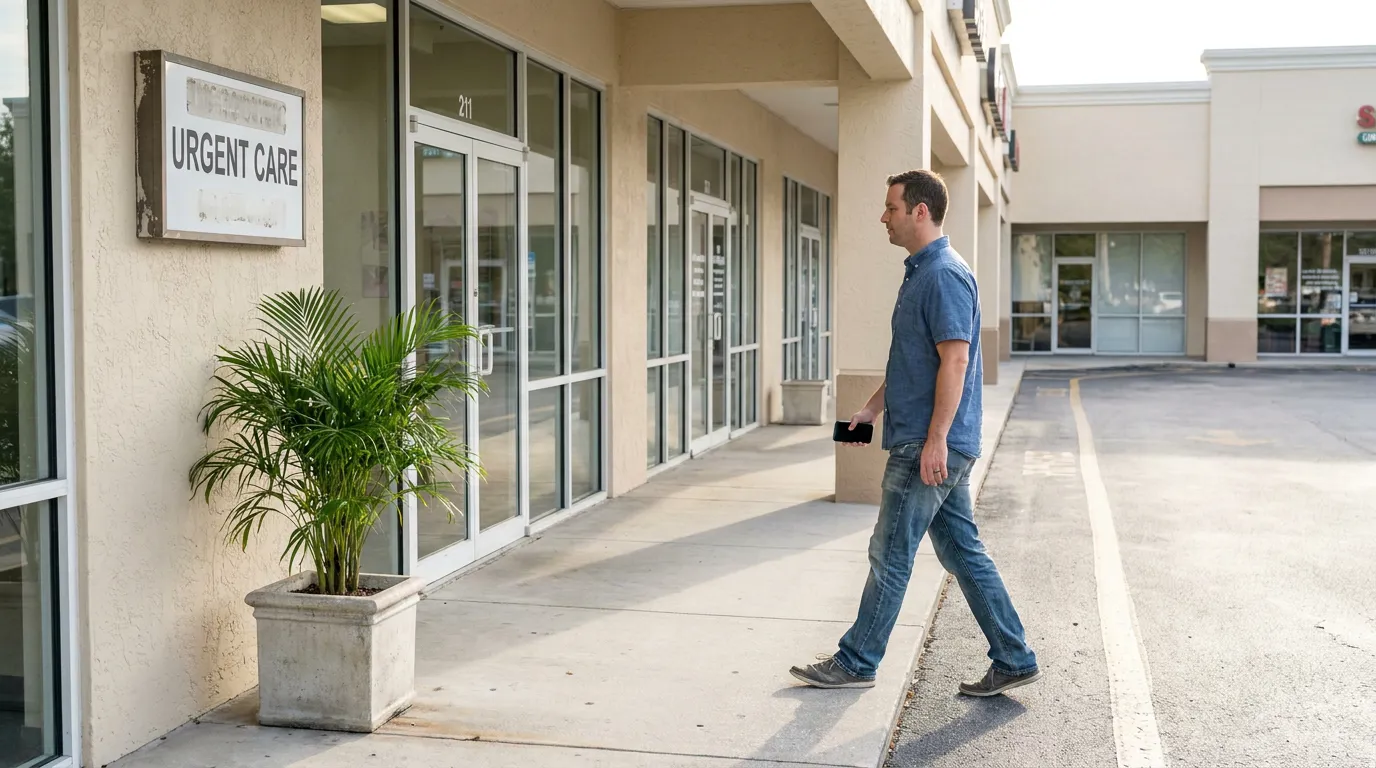
A visit to a provider outside this list, such as a massage therapist, does not meet the requirement. Under Fla. Stat. § 627.736(1)(a)5, PIP does not cover massage or acupuncture at all. Other follow-up care, like physical therapy, may be covered if a qualifying provider refers you. When in doubt, start with an emergency room, urgent care staffed by qualifying providers, or your physician.
💡 Pro Tip: Keep copies of your discharge papers, intake forms, and receipts from your first medical visit. They show the date and provider of your care, which can matter if your insurer questions whether you met the 14-day window.
The $2,500 Limit and Emergency Medical Conditions
Getting care within 14 days is only the first step, because the diagnosis you receive also shapes your benefits. Under Fla. Stat. § 627.736(1)(a)3, 4, you can get up to $10,000 in medical benefits only if a medical doctor, osteopathic physician, dentist, physician assistant, or advanced practice registered nurse finds that you had an emergency medical condition. If a qualifying provider finds you did not have one, reimbursement is limited to $2,500. Chiropractors cannot make this finding.
Why Documentation Matters Early
Doctors typically write down what you tell them, so describing every symptom honestly is important. Mention neck pain, headaches, dizziness, numbness, or trouble sleeping, even if they seem minor. To learn more, read our guide on what counts as an emergency medical condition under Florida law. Outcomes depend on the medical facts of each case.
Deductibles, Lost Wages, and Your Policy Choices
Your own policy choices can affect how much PIP actually pays. Under Fla. Stat. § 627.739, insurers must offer PIP deductibles of $250, $500, and $1,000. The deductible applies to 100 percent of covered expenses and losses before the 80 percent payment starts.
Some policyholders also choose to exclude lost-wage benefits in exchange for a lower premium. Under that same statute, insurers must offer coverage that excludes loss of gross income and loss of earning capacity benefits. This exclusion generally applies to the named insured and relatives living in the household. Review your declarations page to see what your policy includes.
What Your Insurer Must Tell You
Your PIP insurer has its own notice obligation after you report a claim. Under Fla. Stat. § 627.7401(1)-(2), the insurer must mail or deliver a notice of your PIP rights within 21 days after receiving notice of an accident or injury claim. The notice explains benefits, exclusions, limits, when payments are due, and how disputes work. Read it carefully and keep it with your records.
How PIP Connects to a Claim Against the At-Fault Driver
PIP and a lawsuit against the at-fault driver work together, but they generally do not overlap. Under Fla. Stat. § 627.736(3), you generally cannot recover damages from the at-fault driver for amounts PIP already paid or would pay. That section also bars PIP insurers from placing a lien on your tort recovery for PIP benefits.
Florida’s no-fault system also limits when you can recover for pain and suffering. Under Fla. Stat. § 627.737(1)-(2), you may pursue damages for pain, suffering, mental anguish, and inconvenience only if the injury involves:
- Significant and permanent loss of an important bodily function
- Permanent injury within a reasonable degree of medical probability, other than scarring or disfigurement
- Significant and permanent scarring or disfigurement
- Death
Getting care early under the Florida PIP 14-day rule can also help you meet this threshold later. A consistent medical record that starts soon after the crash can make it easier to connect your injuries to the accident. Insurance companies often point to gaps in treatment when they dispute causation.
💡 Pro Tip: Follow through with recommended follow-up visits, imaging, and therapy. A first visit within 14 days helps, but an ongoing treatment record often tells a stronger story about how the crash affected your life.
A System That Lawmakers Continue to Debate
Florida’s PIP law has faced repeated scrutiny over the years. In 2015, then-Chief Financial Officer Jeff Atwater and lawmakers discussed possibly repealing PIP coverage entirely, driven largely by concerns about fraud and costs.
Because the law can change, relying on outdated information is risky. The rules described here reflect the 2025 Florida Statutes, but legislative proposals come up regularly. An attorney can confirm which version of the law applies to your accident date.
Frequently Asked Questions
1. Does the 14-day clock start on the day of the accident?
The statute measures the period as "within 14 days after the motor vehicle accident." Getting care as soon as possible is safest, so you are not cutting it close on the final day.
2. What if my symptoms did not appear until after 14 days?
You will generally lose PIP medical benefits if you did not receive initial care within the window, even if symptoms showed up late. However, you may still have a claim against the at-fault driver if the injury meets the threshold in Fla. Stat. § 627.737. An attorney can review your specific facts.
3. Does a chiropractor visit satisfy the Florida PIP 14-day rule?
Generally, yes. Chiropractic physicians licensed under Chapter 460 are qualifying providers under Fla. Stat. § 627.736(1)(a)1. But a chiropractor cannot find that you had an emergency medical condition. To get more than $2,500, you will generally need that finding from a medical doctor, osteopathic physician, dentist, physician assistant, or advanced practice registered nurse.
4. Do passengers and pedestrians have to follow the 14-day rule too?
Yes. Passengers and pedestrians struck by an insured vehicle may be covered by PIP, depending on eligibility rules like residency and vehicle ownership. The same 14-day requirement applies to their medical benefits.
5. Can my PIP insurer take money from my settlement with the other driver?
Under Fla. Stat. § 627.736(3), PIP insurers cannot place a lien on your tort recovery for PIP benefits. However, you also generally cannot recover from the at-fault driver for amounts PIP paid or would pay.
Protecting Your Health and Your Claim After a Miami Crash
The Florida 14 day rule car accident requirement comes down to one clear step: see a qualifying provider within 14 days. From there, documenting an emergency medical condition, understanding your deductible and lost-wage choices, and keeping consistent treatment records can all shape your benefits. Every policy and injury is different, so it helps to talk through your situation with a Florida 14 day rule car accident lawyer who can explain your options plainly.
At Furmanski Law Group, you work directly with attorney Daniel Furmanski, who brings a strong personal injury background and prior agency-side experience to every case. Call 305-900-6657 or schedule your free consultation to discuss your PIP benefits and next steps. Contact Furmanski Law Group today.
Disclaimer: This content is for informational purposes only and is not legal advice. Every case is unique, and results may vary. Consult an attorney about your specific circumstances.