
When the Car Owner, Not Just the Driver, May Be Responsible in Miami
Key Takeaways: Florida’s dangerous instrumentality doctrine treats motor vehicles as inherently dangerous, allowing an owner who permits someone else to drive to be held vicariously liable for that driver’s negligence. Dating to the 1920 Florida Supreme Court decision in Southern Cotton Oil Co. v. Anderson, this rule is broader than most states’ approaches. Consent, express, implied, or disputed, is typically the deciding issue, though permission can be defeated by theft. The doctrine adds a defendant without removing your burden to prove negligence, causation, and damages. Statutory caps can limit what an owner who merely loaned the car owes, and comparative fault can reduce or bar recovery. In Emerson v. Lambert, the Florida Supreme Court declined to extend vicarious liability to a non-titled family bailee when the title owner was already liable. A two-year statute of limitations generally applies to negligence claims accruing on or after March 24, 2023, making early action on ownership and permission evidence important.
If someone borrowed a car, crashed it, and hurt you, Florida law may allow you to pursue the vehicle’s owner as well as the driver. That is the heart of the florida dangerous instrumentality doctrine, which treats motor vehicles as inherently dangerous when in operation. Under it, an owner who gives another person permission to drive can be held vicariously liable for that driver’s negligence, even though the owner was nowhere near the crash. For an injured person in Miami, that can mean an additional source of accountability and insurance coverage.
If you were hurt in a South Florida collision and you are unsure who can be held responsible, Daniel Furmanski at Furmanski Law Group is happy to talk it through with you. Call 305-900-6657 or contact us now to request a free consultation with a solo attorney who handles your case personally.
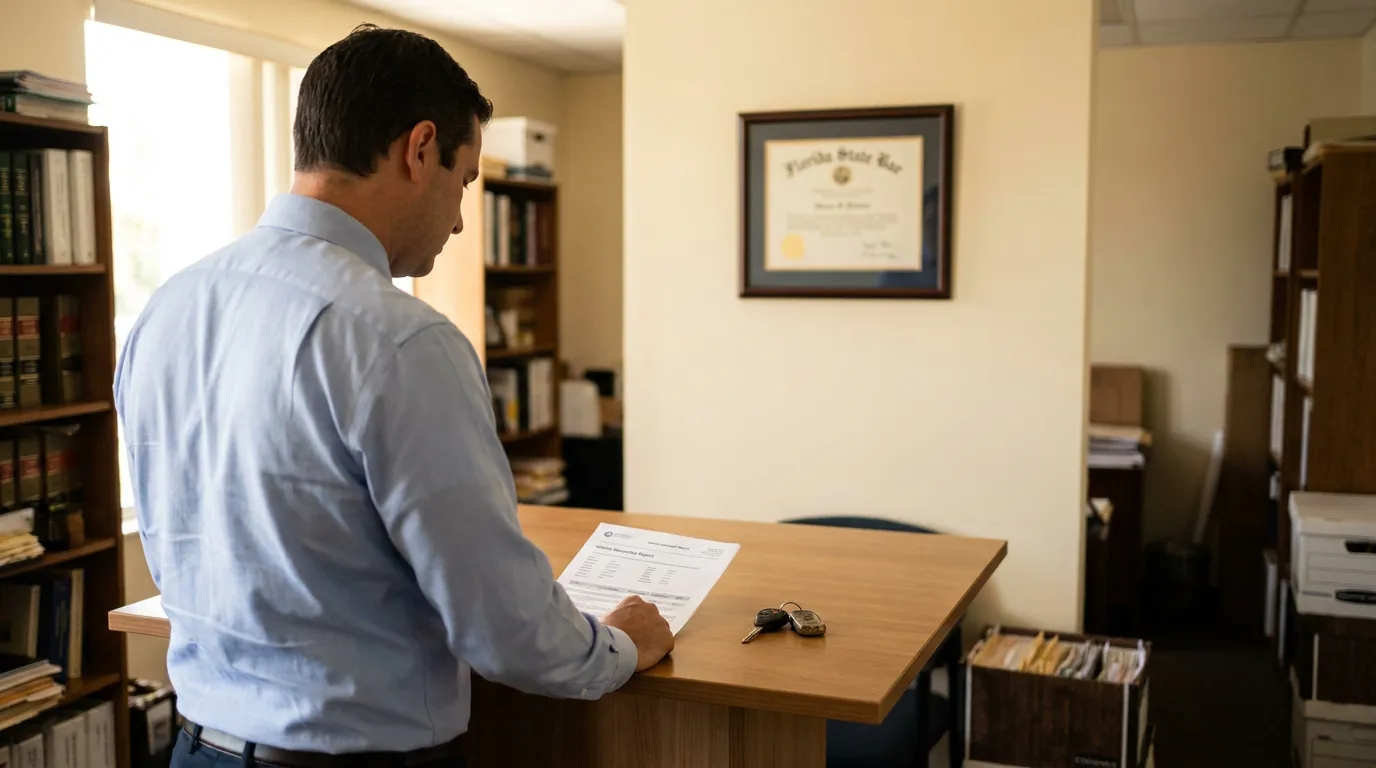
Where the Doctrine Came From and Why Florida Is Different
The doctrine traces back to a 1920 Florida Supreme Court decision, Southern Cotton Oil Co. v. Anderson, 80 Fla. 441, 86 So. 629 (Fla. 1920), which treated the automobile as a dangerous instrumentality. Rather than requiring proof that an owner personally did something careless, the rule allows liability to attach because the owner voluntarily entrusted the vehicle to another person whose negligent operation caused harm. Courts have refined this principle through the decades, including in Aurbach v. Gallina, 753 So. 2d 60 (Fla. 2000).
Florida’s approach is an outlier. A University of Florida law review analysis explained the rule as holding an automobile owner liable for injuries inflicted through negligent driving of a bailee, noting that a bailor may be liable even when the car is gratuitously entrusted to a stranger. Many other states rely on narrower theories, such as the family-purpose doctrine or owner-liability statutes with fixed dollar limits.
What "Permission" Generally Means
Consent is the hinge on which most claims turn. The central question is whether the owner, or another person with an identifiable property interest in the vehicle, knowingly permitted the driver to use it, expressly or by implication. Courts consider prior use, family relationships, where keys were kept, and whether any limits on use were communicated.
- Express permission, such as directly handing over the keys for an errand
- Implied permission, inferred from a pattern of allowing use
- Disputed permission, where the owner claims the driver exceeded the scope
- Alleged theft or conversion, which can defeat the claim entirely
How the Florida Dangerous Instrumentality Doctrine Works in a Real Claim
The doctrine adds a defendant, not a shortcut around proving your case. You still must establish that the driver was negligent and that the negligence caused your injuries and damages. Once negligence is shown, vicarious liability may extend to the owner who consented to that driver’s use, although Fla. Stat. § 324.021(9)(b)3. caps exposure of an owner who is a natural person and merely loaned the vehicle at $100,000 per person and $300,000 per incident for bodily injury, with higher figures if the driver is underinsured and no cap on economic damages in certain circumstances. Damages still require documentation: emergency records, imaging, treatment notes, wage loss proof, and evidence of how injuries changed daily life.
Fault allocation matters too. Juries can parse both negligence and permission in the same verdict. Comparative fault findings can reduce recovery, and for most negligence claims filed after March 24, 2023, a plaintiff found more than fifty percent at fault is barred from recovering at all under Fla. Stat. § 768.81.
💡 Pro Tip: Ask the responding officer’s crash report for the registered owner’s name. Owner information is often the first clue that a claim may involve more than the driver’s policy.
The Limits Courts Have Recognized
The doctrine is broad, but not unlimited. In Emerson v. Lambert, 374 So. 3d 756 (Fla. 2023), the Florida Supreme Court addressed a situation where a son drove with permission of both parents and the plaintiff sought to hold both vicariously liable. The Court held that the doctrine did not support judgment against the mother, who was found to be a bailee, where the father held sole title and was already vicariously liable for the same entrustment.
That holding is narrow. It does not eliminate owner responsibility in a crash; it declines to stack vicarious liability on a non-titled family bailee when the title owner is already answerable, and it confirms that title and legal ownership matter when identifying who the doctrine reaches. Whether a particular person qualifies as an owner, beneficial owner, lessee, or merely a permissive user is fact-dependent and frequently contested by insurers.
Where No-Fault Insurance Fits Into Vehicle Owner Liability
Florida’s no-fault system runs alongside these liability rules rather than replacing them. Under Fla. Stat. § 627.736(1) (2024), personal injury protection benefits pay regardless of fault for injuries arising out of vehicle ownership, maintenance, or use, generally providing up to $10,000 in combined medical and disability benefits, subject to statutory percentages such as eighty percent of reasonable medical expenses and sixty percent of lost income, plus $5,000 in death benefits. Medical benefits are generally limited to $2,500 unless a qualifying provider determines an emergency medical condition existed. Fla. Stat. § 627.737 restricts noneconomic damage claims to cases meeting the permanent injury threshold, which is why identifying every potentially liable party matters in a serious miami injury claim.
| Concept | What It Generally Covers | Who It Reaches |
|---|---|---|
| PIP (no-fault) benefits | Medical and disability benefits regardless of fault, subject to statutory percentages and caps | Named insured, resident relatives, occupants, some pedestrians |
| Negligent driver liability | Damages caused by careless operation | The at-fault driver |
| Dangerous instrumentality doctrine | Vicarious responsibility for the driver’s negligence | The consenting vehicle owner, subject to statutory caps and court-recognized limits |
These figures and statutory references should be confirmed with an attorney, as amendments and case law can change how they apply.
Deadlines That Can Quietly End a Strong Case
Florida sets a two-year statute of limitations for negligence claims under Fla. Stat. § 95.11(5)(a) (2024), governing car crash injury lawsuits, including those pursued under this doctrine, for causes of action accruing on or after March 24, 2023. Claims that accrued before that date generally remain subject to the prior four-year period. Wrongful death actions are likewise subject to a two-year deadline, measured from the date of death, under Fla. Stat. § 95.11(5)(e) (2024).
Exceptions exist, but courts interpret them narrowly. Tolling and delayed-discovery arguments may apply in limited circumstances defined by statute, such as Fla. Stat. § 95.051, but are never automatic. Claims against government entities involve separate presuit notice requirements under Fla. Stat. § 768.28.
Practical Steps That Protect Your Options
Evidence about ownership and permission tends to disappear faster than crash photos. Registration and title records, text messages about borrowing the car, and witness recollections can all become central later. Knowing what to do after a car accident helps preserve those details while they are still fresh.
💡 Pro Tip: Avoid giving a recorded statement to another driver’s insurer about who owned or authorized use of the vehicle before speaking with an attorney. Casual answers about permission can be used to argue the owner is off the hook.
Frequently Asked Questions
1. Does the owner have to be in the car for the doctrine to apply?
No. The florida dangerous instrumentality doctrine focuses on ownership and consent, not presence. An owner who lends a vehicle and stays home may still face vicarious liability for the driver’s negligence, subject to statutory caps.
2. What if the driver took the car without permission?
Lack of consent is a common and often decisive defense. If the vehicle was taken without the owner’s knowledge or authorization, the doctrine generally does not reach the owner.
3. Can I pursue both the driver and the owner?
In many cases, yes. Whether both remain depends on ownership records, permission evidence, and applicable court decisions. Emerson shows that adding a second, non-titled family member is not always permitted.
4. Does this apply to rideshare or company vehicles?
Potentially, though other frameworks often overlap, including rideshare coverage rules under Fla. Stat. § 627.748, employer liability principles, and the short-term rental exemption in 49 U.S.C. § 30106 that generally shields rental car companies from vicarious liability. A florida dangerous instrumentality doctrine lawyer can evaluate which theories fit your facts.
5. How soon should I speak with someone?
Sooner is generally better. Two years can pass quickly while you are treating, and evidence about vehicle ownership and permission is easiest to secure early.
Bringing It All Together After a Miami Collision
Florida’s treatment of automobiles as dangerous instrumentalities reflects a policy choice that owners who entrust their vehicles to others may share responsibility when those drivers cause harm. The doctrine is broad, but statutes and recent decisions confirm it has boundaries tied to title, consent, liability caps, and specific relationships involved. Layered on top are PIP requirements, comparative fault, and a two-year filing deadline that leaves little room for delay. This article is general information rather than advice about your situation, and consulting an attorney is always the better course.
Daniel Furmanski is a solo attorney with a personal injury background and prior agency-side experience, and he built Furmanski Law Group so injured clients and working families across South Florida have direct access to their lawyer, in English or Spanish. Call us today for a free consultation at 305-900-6657, or reach out to our team to discuss what happened.