
How Furmanski Law Group Can Help You With Florida Crash Claims
Choosing a lawyer after a collision is really a question of process: who will handle your file, and do they understand Florida crash claims from the first medical visit through settlement or trial? Furmanski Law Group’s approach is built on hundreds of handled matters, and the firm’s published results represent, in its own words, a few notable outcomes among hundreds of cases won. That volume matters because Florida’s no-fault system, medical-billing disclosure rules, and filing deadlines each contain traps that can quietly reduce recovery.
Want to talk it through with someone who will pick up the file himself? Furmanski Law Group offers free consultations in English and Spanish. Call 305-900-6657 or reach out to our team today.
What Handling Hundreds of Crash Claims Actually Teaches a Lawyer
Volume alone doesn’t win cases, but pattern recognition does. After working through many motor vehicle files, an attorney learns which insurer arguments repeat, which medical records adjusters scrutinize, and which early mistakes cost claimants later. Attorney Daniel Furmanski’s background includes prior agency-side experience, meaning he’s seen how the other side evaluates a claim before it reaches a demand letter.
That perspective shapes the firm’s motor vehicle accident representation, covering car crashes, truck collisions, rideshare incidents, motorcycle wrecks, and boating or jet-ski collisions. Each sub-type carries its own liability framework, from federal trucking regulations to rideshare coverage tiers to maritime principles. Applying the right framework early shapes what evidence gets preserved and which parties get notified.
💡 Pro Tip: Write down witness names and phone numbers at the scene before you leave. Memory fades fast, and independent statements often carry more weight with an adjuster than your own account.
Florida’s No-Fault System and the 14-Day Rule
Florida requires most registered vehicle owners to carry Personal Injury Protection coverage, paying medical and related expenses regardless of fault. Under Fla. Stat. §627.736(1), PIP benefits cover the named insured and other covered persons up to $10,000 combined, with medical benefits typically paid at 80% of reasonable expenses and disability at 60% of lost income. Insurers must notify policyholders of this coverage per Fla. Stat. §627.7407(5)(a).
The timing rule catches many claimants off guard. Under Florida’s no-fault statute, initial services must be rendered within 14 days of the accident to be compensable under Fla. Stat. §627.736(1)(a). Missing that window can defeat PIP eligibility, though follow-up care may still be covered if initial services were timely; PIP is separate from any liability claim against an at-fault driver.
PIP amounts also depend on a medical determination. Fla. Stat. §627.736(1)(a)3. caps benefits at $2,500 unless a physician, dentist, physician assistant, or advanced practice registered nurse determines an emergency medical condition exists, in which case the full $10,000 may apply. Chiropractors cannot make that determination. Whether a condition qualifies is fact-dependent and often disputed, one reason the firm publishes material on emergency medical conditions under Florida’s PIP law.
Payment timing is regulated too. Under Fla. Stat. §627.736(4), overdue PIP payments bear interest at the rate under Fla. Stat. §55.03 or the policy rate, whichever is greater, from the date written notice was furnished. That doesn’t eliminate delays, but it gives a framework for addressing them.
Letter of Protection Florida Medical Bills: What the Disclosure Rules Require
When PIP runs out and treatment continues, many rely on a letter of protection, and Florida law now attaches strict conditions to those bills. Under Fla. Stat. §768.0427(3), as a condition precedent to claiming medical expenses under a letter of protection, the claimant must disclose the letter along with itemized, properly coded billing records. These requirements, effective 2023, apply to civil actions governed by the statute. Failing to assemble that documentation correctly can undermine an otherwise legitimate damages claim.
The statute reaches further: claimants must disclose health coverage status at the time of treatment, and if a referral came from the claimant’s own attorney, evidence of that referral is admissible despite attorney-client privilege under Fla. Stat. §90.502. A referral or financial relationship between a law firm and medical provider is also relevant to provider bias.
-
Keep every bill and record. Itemized, properly coded billing is a statutory requirement.
-
Tell your attorney about all health insurance. Coverage status is disclosable.
-
Expect questions about referrals. Transparency protects credibility.
These rules, in Chapter 768 of the Florida Statutes, reflect a legislative shift toward scrutiny of LOP-based medical damages. A firm that structures treatment arrangements with these obligations in mind from day one puts clients in a stronger position than one that scrambles at litigation.
💡 Pro Tip: Ask any provider treating you under a letter of protection for an itemized statement with CPT codes as you go, rather than at the end.
Deadlines, Liable Parties, and Available Coverage
For crashes on or after March 24, 2023, Florida victims generally have two years to file a negligence-based lawsuit. Fla. Stat. §95.11(4)(a) requires negligence actions within two years; §95.11(4)(e) applies the same period to wrongful death claims, running from the date of death. Claims accruing before the 2023 amendment had a four-year period. Limited exceptions like tolling or minority exist but are interpreted narrowly, no claimant should assume one applies. Civil limitations periods are also distinct from government claim-notice deadlines, such as the pre-suit notice requirement in Fla. Stat. §768.28.
Identifying every source of coverage often matters as much as proving fault. Under Fla. Stat. §324.021(9)(b)3., an owner who loans a vehicle is generally liable up to $100,000 per person/$300,000 per incident for bodily injury, plus $50,000 for property damage; if the operator is underinsured, the owner can face up to an additional $500,000 in economic damages. Separately, Fla. Stat. §324.023 requires a DUI-convicted driver to maintain financial responsibility of $100,000/$300,000/$50,000 for a statutory period. Knowing these figures helps set realistic expectations, though actual recovery depends on available policies and assets.
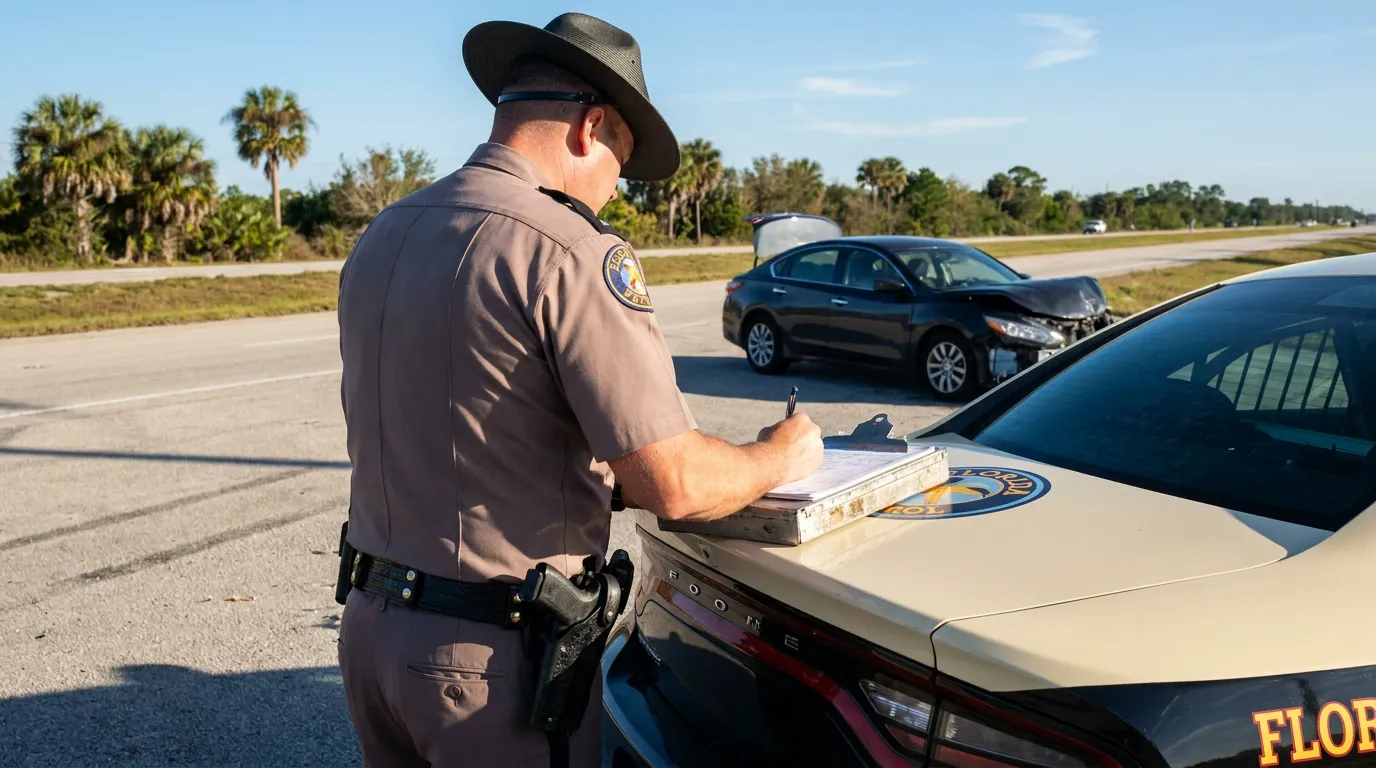
Documentation supports all of it. Under Fla. Stat. §316.065, drivers must report crashes involving injury, death, or at least $500 in damage to law enforcement. The state’s guidance on steps to take after a crash covers exchanging information and obtaining a report number, and the firm’s guide on what to do after a car accident covers the same ground in plain language.
💡 Pro Tip: Photograph the other driver’s insurance card and license plate rather than copying numbers by hand. Transcription errors commonly cause delays.
What the Super Lawyers and National Trial Lawyers Recognitions Signal
Peer recognition isn’t a promise of outcome, but it’s a meaningful independent data point when choosing counsel. Daniel Furmanski was recognized as a 2026 Rising Star by Super Lawyers, a distinction the firm’s site states is awarded to the top 2.5% of eligible Florida attorneys. He has also been named a Top 40 Under 40 Attorney by The National Trial Lawyers.
These designations come from outside organizations rather than self-declaration, which gives them weight. For a reader comparing options, they suggest other lawyers and reviewers have found the work credible. Criteria vary by organization, and results still depend entirely on each case’s facts.
Why You Should Choose Furmanski Law Group
The most practical reason is access: every client communicates directly with attorney Daniel Furmanski from start to finish. As the firm’s sole attorney, he handles each file personally rather than passing it down a chain, providing regular updates, transparent explanations, and proactive guidance. For a first-time claimant worried about medical bills and adjuster calls, knowing who’s answering matters.
Experience, Language, and Community
Furmanski Law Group serves Miami-Dade and Broward counties from offices in Miami Springs and Hollywood, in both English and Spanish. Daniel Furmanski is fluent in both languages, serving Miami’s diverse community without language barriers. Published past results include a $3,400,000 truck accident claim, a $550,000 motor vehicle accident matter, and a $500,000 wrongful death case. These figures reflect gross recoveries before fees, costs, and liens; past results do not guarantee similar outcomes in other cases.
The firm describes its representation as hands-on and persistent in dealings with insurance companies and large defendants. Free consultations are available so you can understand your options before committing to anything.
Frequently Asked Questions
Common Questions About Motor Vehicle Accidents in Florida
1. What happens if I waited more than 14 days to see a doctor?
Under Fla. Stat. §627.736(1)(a), initial services generally must be rendered within 14 days of the crash to be compensable under PIP. If you missed that window, PIP medical benefits may be unavailable, though other recovery sources, a liability claim, health insurance, or uninsured motorist coverage, could still exist. An attorney can review your timeline.
2. Can I still file a lawsuit after two years?
For crashes on or after March 24, 2023, Fla. Stat. §95.11(4)(a) sets a two-year period for negligence actions. Limited exceptions like tolling or claims involving minors may apply, but courts construe them narrowly. Prompt consultation is the safer course.
3. Why did my PIP only pay $2,500?
Fla. Stat. §627.736(1)(a)3. limits benefits to $2,500 unless an authorized provider determines the injured person had an emergency medical condition. Whether that determination was made and documented, and whether it can be revisited, depends on your medical records.
4. Does a letter of protection hurt my case?
Not inherently, but Fla. Stat. §768.0427(3) requires disclosure of the letter, itemized billing, health coverage status, and attorney referrals, and the defense may use that information to argue provider bias. Handled and documented properly, LOP treatment remains a common, lawful arrangement.
5. Do I need a police report to bring a claim?
A crash report isn’t required, but Fla. Stat. §316.065 requires reporting crashes involving injury, death, or at least $500 in damage, and the report is often useful evidence, though generally not admissible at trial. Obtaining one early is worthwhile.
Bringing It Together
Florida crash claims sit at the intersection of no-fault insurance rules, medical-billing disclosure requirements, and firm statutory deadlines, and small early decisions echo through the entire case. Hundreds of handled matters give a lawyer the pattern recognition to anticipate those decisions rather than react to them. The right approach depends on your own facts, injuries, and available coverage, which is why a conversation with an attorney is the sensible first step.
If you were hurt in a crash anywhere in South Florida, Furmanski Law Group is ready to listen. Call today for a free consultation at 305-900-6657, or get your free case review started.
Disclaimer: This content is for informational purposes only and is not legal advice. Every case is unique, and results may vary. Consult an attorney about your specific circumstances.