
The Moment Your Uber Ride Is Accepted, the Insurance Picture Changes
Key Takeaways: Florida’s rideshare insurance framework under Fla. Stat. § 627.748 divides coverage into distinct periods based on app status at the moment of the crash. Period 1 (logged on, waiting for a request) generally requires only $50,000 per person, $100,000 per incident, and $25,000 in property damage. The $1 million liability requirement generally attaches when the driver accepts a ride request and typically remains through Period 3 until the rider exits. This coverage generally protects passengers, other motorists, cyclists, and pedestrians harmed by an at-fault rideshare driver, but typically does not reimburse the driver’s own losses. Trip logs, GPS data, and platform log-on/log-off records frequently become critical evidence in disputed claims.
When an Uber or Lyft driver taps "accept" on a ride request, insurance coverage may change dramatically. Before acceptance, the driver is generally covered by modest waiting-period limits. Once the ride is accepted, a $1 million liability requirement generally attaches and typically stays in place until the passenger exits the vehicle. That single tap can be the difference between a $50,000 per-person limit and one with far more capacity to compensate serious injuries.
If you were hurt in a rideshare crash in Miami or South Florida, the team at Furmanski Law Group can help you sort out which policy may apply. Call 305-900-6657 or contact us now for a free consultation.
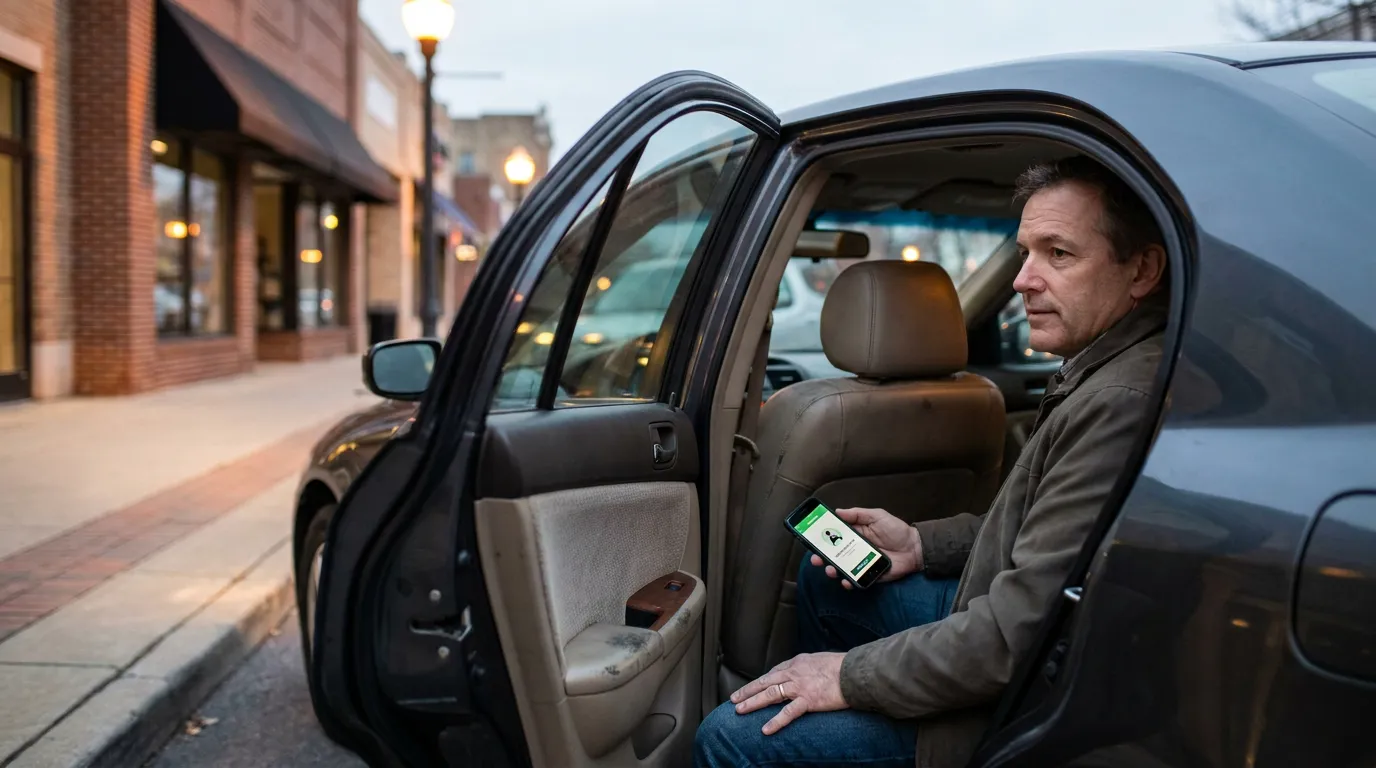
How Florida 627.748 Rideshare Insurance Periods Actually Work
Florida generally organizes rideshare coverage around what the driver was doing on the app at the moment of impact. The transportation network company statute sets separate insurance obligations for a driver logged on but not yet engaged versus one who has accepted a trip. Understanding the florida 627.748 rideshare insurance periods is usually the first step in evaluating a rideshare crash claim.
The industry generally describes three periods. Period 1 is app on, waiting for a match. Period 2 generally begins once the driver is matched and heading to pickup. Period 3 runs while the rider is in the vehicle and ends when the rider exits. When the app is off entirely, typically only the driver’s personal auto policy applies, and the rideshare company’s coverage is generally not triggered.
Period 1: Logged On, Waiting for a Request
During the waiting period, Florida law generally requires only lower baseline limits. Under Fla. Stat. § 627.748(7)(b), while a participating TNC driver is logged on but not engaged in a prearranged ride, the required coverage includes primary automobile liability of at least $50,000 for death and bodily injury per person, $100,000 per incident, and $25,000 for property damage, along with PIP and UM/UIM coverage as required by § 627.727.
These waiting-period limits can fall short in a serious collision. A single hospitalization with surgery can exhaust $50,000 quickly. These are minimums, and the platform’s Period 1 coverage may be structured to respond only if the driver’s personal policy does not apply or is insufficient.
Periods 2 and 3: The $1 Million Policy Attaches
The higher limit generally attaches at ride acceptance, rather than passenger pickup. Under § 627.748(7)(c)-(d), a TNC driver engaged in a prearranged ride must be covered by primary automobile liability of at least $1 million, along with PIP and UM/UIM coverage. A prearranged ride generally begins when the driver accepts the request. So a passenger injured mid-trip and a pedestrian struck while the driver was en route to pickup may both be looking at the same million-dollar layer.
That $1 million figure is generally third-party liability coverage. It is generally intended to compensate passengers, other motorists, cyclists, and pedestrians harmed by an at-fault rideshare driver, up to the policy limit and subject to Florida’s comparative fault rules. It typically will not reimburse the at-fault driver for their own damages.
What Else Comes With Period 2 and Period 3 Rideshare Coverage
Beyond liability, platform policies typically add other layers during Periods 2 and 3. These can include contingent collision and comprehensive coverage, uninsured and underinsured motorist protection, and personal injury protection where state law requires it.
- Contingent collision and comprehensive generally apply regardless of fault, but typically only if the driver already carries collision and comprehensive personally.
- Those contingent coverages are typically limited to actual cash value with a substantial deductible, commonly $2,500.
- UM/UIM coverage can matter enormously when the at-fault party carries little or no insurance.
💡 Pro Tip: Screenshot your trip receipt, driver name, vehicle, and trip timestamps before anything gets deleted. Those records can help establish the app status that drives the entire coverage analysis.
Why the Statute’s Disclosure and Exclusion Rules Matter to You
Section 627.748(8) helps explain why the tiered periods have real consequences. A personal auto insurer may exclude coverage while a TNC driver is logged on or providing a prearranged ride. That exclusion is one reason the TNC’s commercial policy may become the operative source of recovery.
The same subsection creates transparency obligations. Before a driver may accept a prearranged ride, the TNC must disclose the insurance coverage it provides, including types and limits. During a claims investigation, the statute provides that the TNC shall immediately provide the precise times that the driver logged on and off the digital network in the 12-hour period immediately preceding and following the accident.
Florida law also indicates coverage obligations can be met in more than one way. Under § 627.748(7), requirements may be satisfied by insurance maintained by the driver, the TNC, or a combination of both. Anyone weighing next steps after a collision should consult a lawyer familiar with how these layers stack.
Florida TNC Liability Limits at a Glance
| App Status | Typical Liability Limits | Other Coverage Notes |
|---|---|---|
| App off | Personal auto policy only | Platform coverage generally not triggered |
| Period 1: logged on, waiting | $50,000 per person / $100,000 per incident / $25,000 property damage | PIP and UM/UIM required; may be contingent |
| Period 2: ride accepted, en route to pickup | Generally $1 million third-party liability | PIP and UM/UIM required; contingent collision/comprehensive may apply |
| Period 3: passenger on board | Generally $1 million third-party liability | Generally ends when the rider exits the vehicle |
Figures reflect statutory minimums and commonly published platform terms; actual coverage depends on the policies in force at the time of the crash.
Common Fights Over Which Period Applied
Because so much money can turn on app status, that status frequently becomes contested. A driver might have accepted a ride seconds before impact, or canceled one seconds after. Insurers sometimes take the position that the driver was still in the waiting period, which could limit exposure to lower limits.
Documentation often helps resolve these disputes, but generally only if it is preserved. Trip logs, GPS pings, driver statements, dashcam footage, and the platform’s log-on and log-off records all bear on the question. Preservation letters sent early can be important.
Coverage Is Layered, Not Automatic
Rideshare platform coverage is often described as contingent, meaning the driver’s personal policy may be treated as primary. Florida requires coverage applicable during a prearranged ride to be primary, so whether a layer is contingent depends on the period and policy language. Drivers who never disclosed rideshare work to their personal insurer may face a denial, which can complicate the claim.
Rideshare insurance requirements are set by state law and vary by jurisdiction. Florida’s requirements are statutory, and outcomes in any individual case depend heavily on the specific policy language in force.
💡 Pro Tip: Report the crash inside the app and to your own insurer, but be cautious about giving a recorded statement to any adjuster before you understand which policy may be on the hook.
Practical Steps After a Rideshare Collision in South Florida
What you do in the first days can shape the strength of a rideshare crash compensation claim. Get medical attention promptly, because Florida’s PIP framework generally requires initial services within 14 days of the crash. Keep every bill, referral, and receipt in one place.
Document how the injuries affect your daily life. Lost wages, missed shifts, and the toll on your family may all be part of the picture. For a fuller overview of how these claims are handled, our page on rideshare liability limits Florida walks through the process.
Daniel Furmanski handles these matters personally. As the sole attorney at the firm, he brings a strong personal injury background and prior agency-side experience to the table, which means he understands how carriers may evaluate and defend rideshare files. Clients work directly with him, in English or Spanish.
Frequently Asked Questions
1. Does the $1 million policy apply if the driver had not picked me up yet?
Generally, it may. Period 2 generally begins once the driver accepts the request and heads toward pickup, and the higher liability limit typically applies from that point forward.
2. What if my Uber driver was not at fault?
You may still have avenues to recover. The at-fault motorist’s liability coverage would generally be the starting point, and uninsured or underinsured motorist coverage under the rideshare policy or your own policy may come into play.
3. Can Uber’s coverage pay for my medical bills as a passenger?
Uber passenger injury coverage under the platform’s third-party liability policy is generally designed to compensate people harmed by an at-fault rideshare driver, which may include medical expenses. In Florida, PIP benefits generally apply first.
4. How do I prove which period the driver was in?
The platform’s log-on and log-off records are often the most direct evidence, and Florida’s TNC statute requires the company to provide precise log-on and log-off times during a claims investigation.
5. Does the driver’s personal insurance still matter?
Often, it may. Personal insurers are permitted to exclude coverage while the driver is logged on or providing a prearranged ride, and some platform coverage is written to respond only if the personal policy is unavailable or insufficient.
Knowing the Period Is the Key to Knowing the Coverage
Rideshare claims look simple from the outside and rarely are. Florida’s statutory framework creates meaningfully different coverage tiers based on what the driver’s app was doing at the moment of the crash, and the jump to a $1 million layer at ride acceptance can be among the most consequential lines in that structure. Because outcomes depend on the specific facts, policy language, and available electronic records, no two rideshare cases resolve the same way.
If you or someone in your family was injured in an Uber or Lyft crash, Furmanski Law Group is ready to review what happened and explain which coverages may apply. Call 305-900-6657 or reach out to our team today for a free consultation.
Disclaimer: This content is for informational purposes only and is not legal advice. Every case is unique, and results may vary. Consult an attorney about your specific circumstances.