
What Florida Law Really Asks You to Prove After a Slip and Fall
Key Takeaways: Florida Statute §768.0755 requires plaintiffs who slip on a transitory foreign substance in a business to prove the business had actual or constructive knowledge of the dangerous condition. Since actual knowledge is rarely documented, most cases rely on constructive knowledge, proven through circumstantial evidence in two ways. First, under §768.0755(1)(a), show the hazard existed long enough that ordinary care should have discovered it, using surveillance video, the substance’s physical condition, and inspection logs. Second, under §768.0755(1)(b), show the condition occurred with regularity and was foreseeable, supported by repair records, complaints, and incident reports. Some courts recognize that where the business created the hazard, the notice analysis differs, though decisions vary. Common-law duties still govern non-substance cases like structural defects. As Messner v. Webb’s City shows, claims fail when the record lacks evidence of duration or origin, making quick evidence preservation critical.
If you slipped on a spill at a South Florida business, the hardest part of your case is usually proving the business knew, or should have known, about the hazard. Under Florida’s slip-and-fall statute, you must prove the business had actual or constructive knowledge of the dangerous condition. Actual knowledge means someone at the business already knew. Constructive knowledge, often the only available path, can be established through circumstantial evidence in two ways: showing the hazard existed long enough that a reasonably careful business should have found it, or showing the condition occurred with regularity and was therefore foreseeable.
Daniel Furmanski at Furmanski Law Group handles these cases personally. Call 305-900-6657 or reach out for a free consultation to discuss your situation.
Understanding Florida Statute 768.0755 Constructive Notice
Fla. Stat. §768.0755 sets the framework for nearly every transitory foreign substance case in Florida. Under §768.0755(1), you must prove the business had actual or constructive knowledge of the dangerous condition and should have remedied it. Section 768.0755(2) preserves common-law duty of care for injuries involving non-transitory conditions like broken stairs or poor lighting.
Constructive knowledge may be proven by circumstantial evidence. You are not required to produce a witness who heard an employee admit the spill existed for an hour. Courts may consider surrounding facts and reasonable inferences, though Florida courts reject inferences resting on speculation or stacking one inference upon another. Review the Florida slip and fall statute for the statutory language.
This statute was created by SB 1224 in 2010, which repealed the prior premises-liability provision at s. 768.0710, effective July 1, 2010. This legislative shift changed how these claims are litigated.
The First Path: Length of Time the Hazard Existed
The first prong under §768.0755(1)(a) asks whether the dangerous condition existed for such a length of time that, in ordinary care, the business should have known of it. If a puddle sat in an aisle for forty minutes while employees walked past it, a jury may conclude the store should have discovered and cleaned it.
What Evidence Tends to Support a Time-Based Theory
The proof is almost always circumstantial. Evidence that carries weight includes:
- Surveillance footage showing when the substance first appeared
- Physical characteristics like dirt, tracked footprints, or dried edges
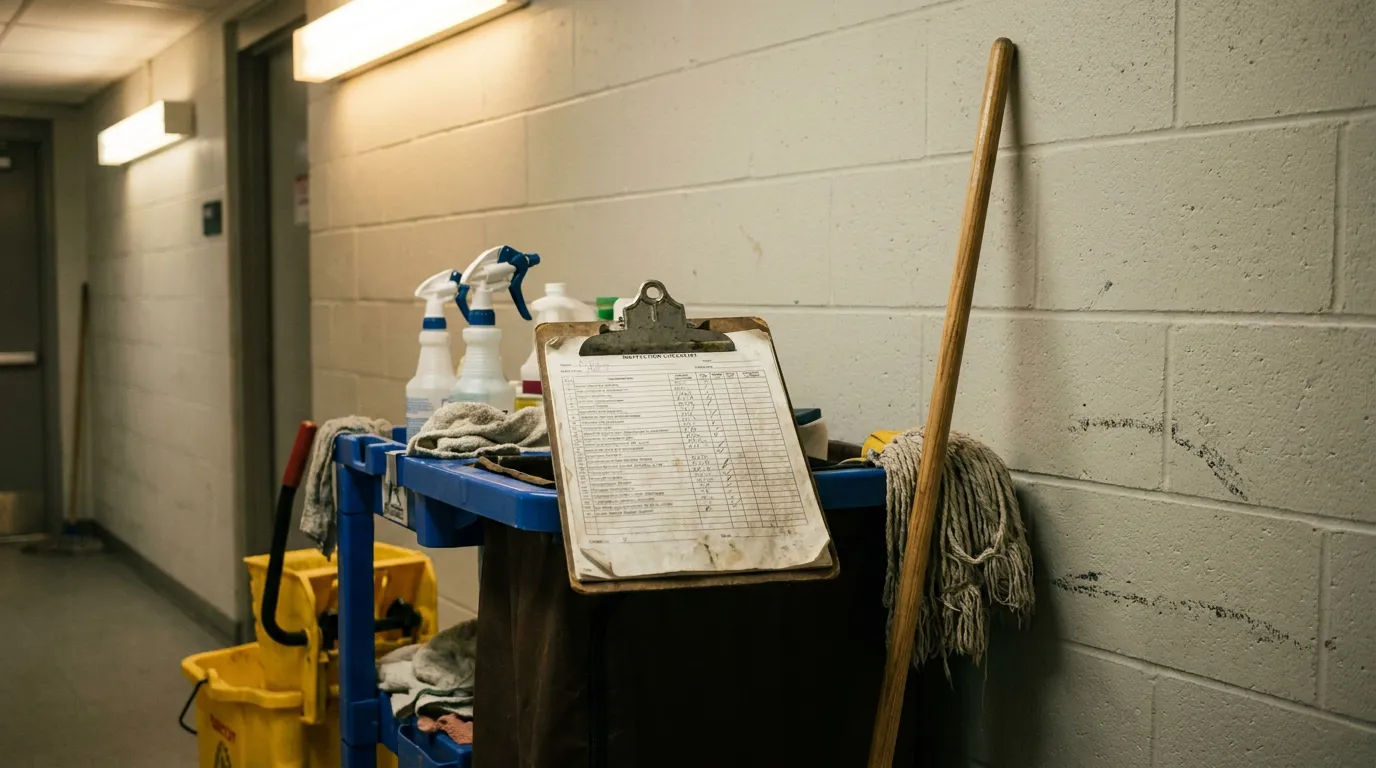
- Inspection logs showing the last documented walkthrough
- Witness accounts from customers who noticed the hazard earlier
- Employee statements about staffing and cleaning routines
💡 Pro Tip: Surveillance video is frequently overwritten within days or weeks. A written preservation request sent early can make the difference.
Why Time-Based Claims Sometimes Fail
Florida courts require real evidence of duration, not speculation. The Florida Supreme Court’s decision in Messner v. Webb’s City, Inc., 62 So. 2d 66 (Fla. 1952), illustrates this vividly. A customer stepped on a two-inch finishing nail on the store floor and fell. The Court found no evidence of how long the nail had been there, nor from which it could reasonably be inferred that the nail had been there long enough to charge the defendant with constructive notice. The directed verdict for the store was affirmed.
That 1952 case predates the current statute but remains a cautionary example of how Florida courts treat a silent record. Proving the hazard existed is not the same as proving the owner knew or should have known about it.
The Second Path: A Recurring Condition That Was Foreseeable
The second prong, §768.0755(1)(b), allows constructive knowledge where the condition occurred with regularity and was therefore foreseeable. This route depends on pattern, not timeline. If the same freezer leaks every summer afternoon, or the same entryway floods when it rains, the business may be charged with knowledge because the problem is recurring and predictable. Courts generally require evidence of a genuine pattern involving the same or substantially similar condition.
Foreseeability turns on records the business controls. Prior incident reports, repair invoices, maintenance work orders, customer complaints, and internal emails can all show a pattern. This evidence often surfaces during discovery in a filed lawsuit.
| Statutory Prong | Core Question | Common Proof |
|---|---|---|
| §768.0755(1)(a) | How long was the hazard there? | Video, substance condition, sweep logs |
| §768.0755(1)(b) | Does this keep happening? | Repair records, prior complaints, incident reports |
When the Business Created the Hazard Itself
Where the dangerous condition was created by the owner or its employees, courts have historically treated the case differently, reasoning that a party who creates a hazard does not need separate notice of it. Florida appellate courts have not spoken uniformly on how this principle interacts with §768.0755, so availability depends on the district and facts. In Messner, the Court distinguished cases where the condition was created by the owner, noting that in such cases the breach question is usually submitted to the jury. The claim failed partly because there was no evidence the nail’s presence resulted from the defendant’s employees.
A property owner generally owes invitees a duty to use ordinary care in maintaining the premises and to warn of latent perils known to the owner or that should have been known through reasonable care. Whether a specific condition qualifies is fact-dependent.
Practical Steps That Protect Your Injury Claim
What you do in the first days after a fall often shapes what evidence exists later. Photograph the hazard from multiple angles, including wide shots showing the surrounding area and any warning signs present or absent. Report the incident to a manager and request a copy of the written report. Get names and phone numbers for witnesses.
Seek medical attention promptly, even if you feel fine. Gaps in treatment are commonly raised against injured people, and consistent medical records connect your injuries to the fall. Keep every bill and discharge instruction.
💡 Pro Tip: Avoid giving a recorded statement to an insurance adjuster before understanding your medical picture. You generally have no obligation to give a recorded statement to another party’s insurer.
Our premises liability lawyer page walks through the claims process.
Frequently Asked Questions
1. What is the difference between actual and constructive notice?
Actual notice means the property owner in fact knew about the hazard, while constructive notice means the owner should have known. Under §768.0755, constructive knowledge may be shown through circumstantial evidence.
2. Do I need a witness to prove how long a spill was on the floor?
Not necessarily. Because the statute permits circumstantial proof, the physical state of the substance, surveillance timing, and inspection records may support a reasonable inference about duration. Whether that evidence is sufficient depends on the specific facts.
3. Does §768.0755 apply to every fall on someone else’s property?
No. The statute addresses slip-and-fall injuries involving a transitory foreign substance in a business establishment. Other premises cases, such as negligent security or structural defects, are analyzed under common-law duty principles, which §768.0755(2) preserves.
4. What if the store says the hazard was open and obvious?
That defense is commonly raised but does not automatically defeat every claim. The open and obvious nature of a condition can eliminate a duty to warn, yet a business may still owe a duty to maintain the premises safely. Florida applies modified comparative negligence, meaning a plaintiff found more than 50 percent at fault generally recovers nothing, while a lesser share of fault reduces recovery proportionally.
5. How quickly should I act after a fall?
As soon as reasonably possible. Florida’s statute of limitations for most negligence claims accruing on or after March 24, 2023 is two years, while many earlier claims were governed by a four-year period. Different rules and shorter notice requirements can apply when a government entity is involved. Confirm the deadline with an attorney.
Bringing the Two Prongs Together
Florida gives injured people two distinct routes to constructive knowledge. One asks how long the dangerous condition sat there. The other asks whether the same problem keeps happening. Neither is a formality, and as Messner shows, cases fail when the record is silent on both. Outcomes depend on the specific facts, available evidence, and how quickly evidence is preserved. For more reading, our Florida premises liability articles cover related questions.
If you were hurt on someone else’s property in South Florida, Daniel Furmanski will personally review what happened and explain your options. Call 305-900-6657, visit Furmanski Law Group, or schedule your free consultation today.